
Characteristics of the world’s great innovators are within your reach.
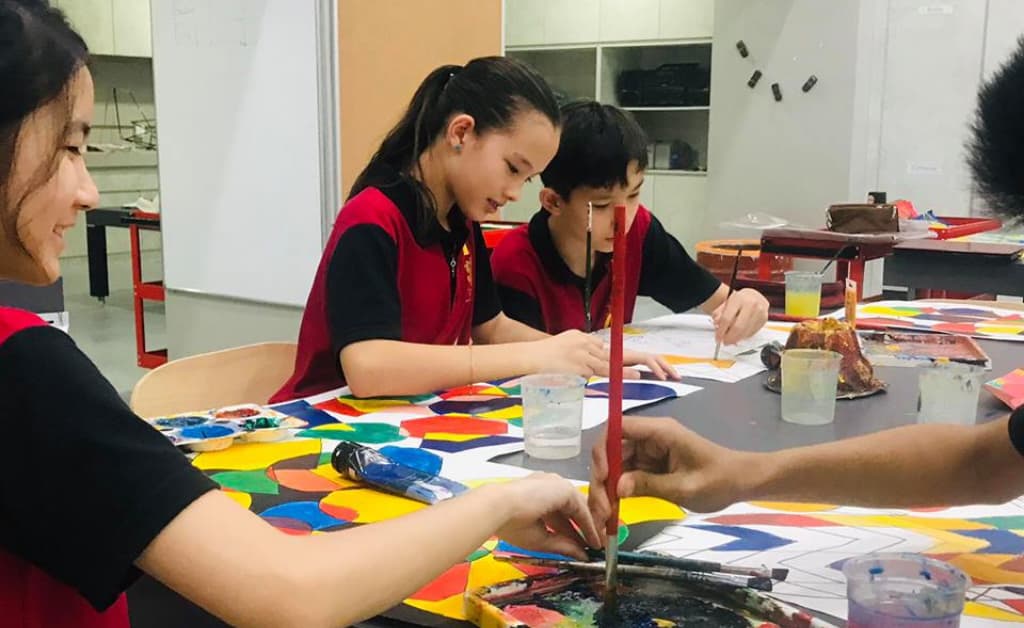
Kingsgate educators foster and develop these traits.
Could your children join this list of innovators?
Do you understand the characteristics and skills of the worlds great innovators?
Here are some of the best up & coming innovators in Gen Y (born since 1980)
- Mark Zuckerberg
The billionaire co-founder and CEO of Facebook is responsible for the most successful social networking website on the internet, born while he was studying at Harvard. - Dustin Moskovitz
A former co-founder of Facebook with Mark Zuckerberg, Moskovitz left Facebook to found Asana, the web-based productivity software. - Blake Ross
The pioneering founder of the Mozilla Firefox project, the successful open-source browser, Ross also worked at Facebook as head of product. - Matt Brimer
Brimer is the co-founder of General Assembly, a global education company that provides entrepreneurs with opportunities and education in technology, design, and business. - Jay Kimmelman
Kimmelman is the co-founder of Bridge International, a nonprofit designed to bring low-cost high quality education to those living on less than $2 a day. - Ben Rattray
Founder and CEO of change.org, the online petition site focused on social change. Rattray has been named one of Fortune’s 40 under 40 rising young business leaders. - Leila Janah
Janah is the founder and CEO of Samasource, a nonprofit organization whose mission is to connect poor women and youth to the digital economy and “harness the untapped potential of the world’s poor.” - Daniel Epstein
Co-founder of Unreasonable Institute, a “boot camp” for social entrepreneurs from around the world, Epstein offers successful applicants the opportunity to connect with mentors and potential investors and access the resources to make their dreams a reality. - Pete Cashmore
Founder and CEO of Mashable, Cashmore is responsible for one of the most influential blogs and one of the world’s largest websites. - Elliott Bisnow
Bisnow is the founder and CEO of Summit Series, an innovative conference series for entrepreneurs based in Utah. - Jack Andraka
He was only born in 1997, but by the age of 15 he has already changed the world with his innovation. Andraka has developed a new way to detect pancreatic, ovarian, and lung cancer during early stages when there is a much higher likelihood of a cure. His inexpensive method, which could save countless lives, won the 2012 Gordon E. Moore Award, the grand prize of the Intel International Science and Engineering Fair. - Eesha Khare
She is another impressive young innovator, who at the age of 18 created a tiny device that could charge a mobile phone in 20-30 seconds—a revolutionary technology she calls a “super-capacitor.” She won the 2013 Intel Foundation Young Scientist Award for her invention, and plans to use the prize money to pay for her tuition at Harvard and continue her work as an inventor.
So what makes them different?
What are the characteristics of the worlds great innovators?
How can we foster and develop these characteristics of innovation?
1. Divergent Thinking
Divergent thinking is similar to brainstorming in that it involves coming up with many different ideas to solve a single problem. When you use divergent thinking, you are looking for options instead of just choosing among the ones that are already available.
2. Insatiable Curiosity
Curiosity is the main driving force behind scientific activity. Scientific curiosity, insatiable in its explorations, does not know what it will find, or where it will lead. These types of people have an inherent curiosity that motivates them to ask, “What happens if I put these two things together?” or “How can I get from A to B more easily?”
Successful innovators look at everything as though they’re viewing it for the first time and reject others’ preconceived notions of how the world works.
3. Infectious Passion
Like the common cold, emotions are literally contagious. You can “catch” an emotion just by being in the same room with someone. The center of our conscious thought (the prefrontal cortex) is so tightly connected to the emotion-generating amygdala, that no one makes decisions based on pure logic. Innovators and leaders will literally spread their motivation and develop infectious buy-in by others when they get excited and passionate about something.
4. Stamina
Leaders can be the smartest, fastest, and most social adept person. But if they don’t have physical and emotional stamina, they don’t have what it takes to be a great leader. Innovative success is rarely instantaneous, and they have an unshakable perseverance. They wont stop until they succeed.
5. Compelling Leadership
People aspire to be around compelling leaders because they want to be influenced and impacted by them. Innovation can be a solitary endeavor, but to be successful, innovators need to be able to rally a team around them. When a vision, idea or plan is very compelling then members of the team can see no choice but to be involved. The argument is beyond challenge.
6. Respect for Other Leaders and Innovators
Part of great leadership and innovation, as well as success, is respecting other people who can help bring an idea to fruition. We know we are not invincible and we know other people, their skills and abilities, are invaluable. Great leaders seek out and engage the skills and abilities of other people.
7. Courage
Courage is an important quality that distinguishes great leaders from excellent managers. They are not just operational. Courageous leaders take risks that go against the grain of their organizations. They make decisions with the potential for revolutionary change in their industry or area of interest. The dictionary definition of courage is “the quality of mind or spirit that enables a person to face difficulty, danger, pain, etc., without fear.” Courageous leaders lead with principles and don’t shirk bold actions because they fear failure.
Characteristics of the worlds great innovators seem beyond our control or reach but that may not be so. Parents, teachers and all members of the circle can foster these characteristics. What we say and what we encourage will build and develop these traits. Success does not have to mean joining the above list but it can very much mean achieving your potential. We are all happy when we are satisfied by and value our life accomplishments.
Let’s find ways to encourage everyone, including our children, to develop these traits.